
I Let an AI Agent Maintain My Open Source Suite for a Week — Here's What Actually Happened

I maintain the UNICORN Binance Suite: 7 Python repositories, 2.8M+ PyPI downloads, 388+ dependent projects, and production usage in algorithmic trading systems running 24/7 against real money.
WebSocket streams, REST APIs, local order books, trailing stops, Kubernetes depth cache clusters — the kind of infrastructure that normally has a team behind it.
It doesn’t. It has me.
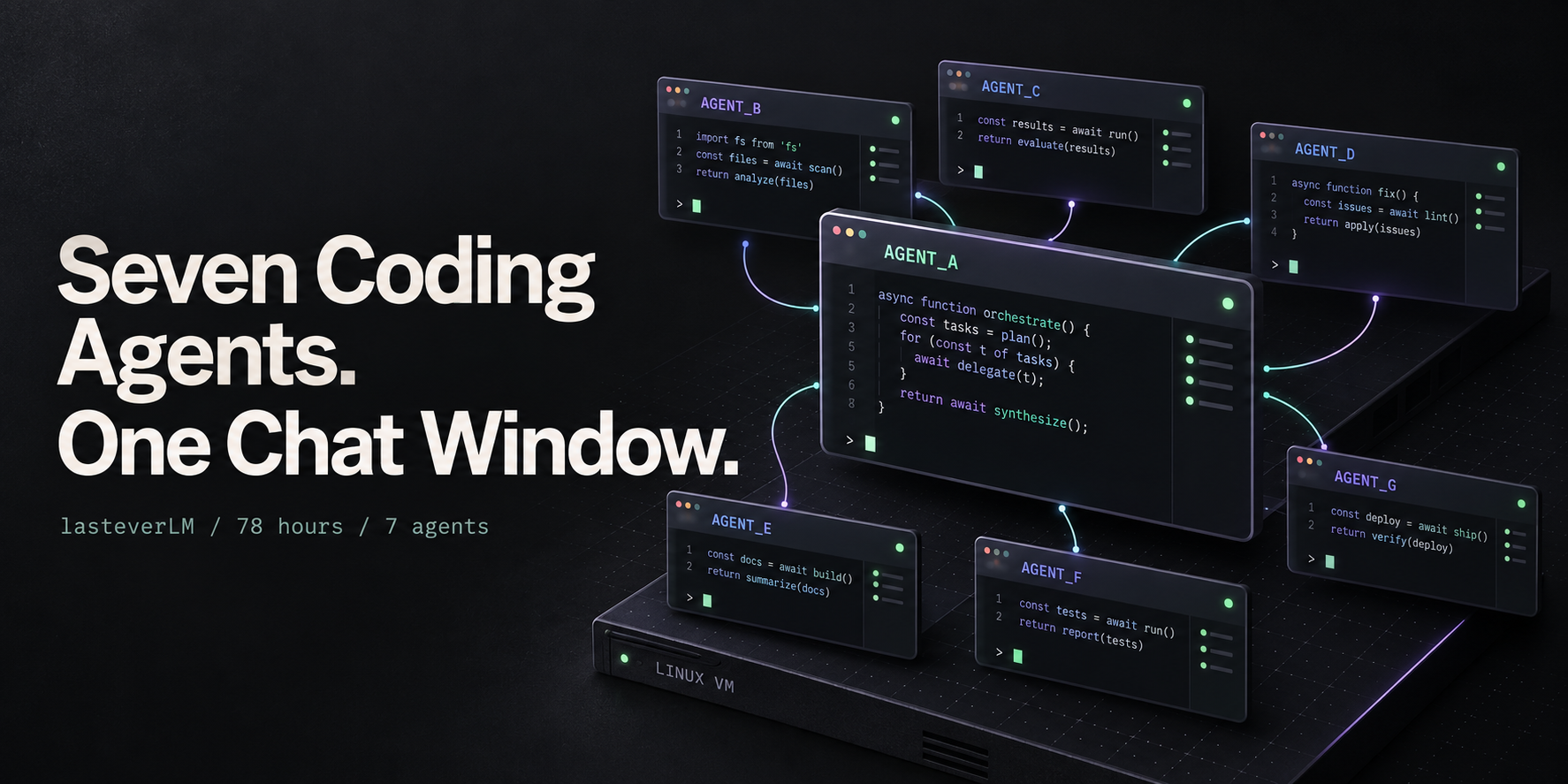
Last week I gave Claude Code commit access via a dedicated GitHub account
(@oliver-zehentleitner-aigent) and pointed it at the backlog.
One week later:
Work that would have taken me weeks to months was done.
Notably:
500+ files changed
100+ PRs created
7 repositories fully synchronized and updated
entire UBS stack released and brought up to current state
all known bug reports closed
~€100 cost
This is not hype. This is a field report.
The Backlog
Years of solo-maintainer entropy:
LUCIT branding everywhere (7 repos, hundreds of files)
Custom LSOSL license blocking contributors
Python 3.7 baseline (in 2026)
A core repo with no release for 4 years
CI pipelines that barely validated anything
Dead services, dead links, dead integrations
Individually trivial. Collectively unmaintainable.
That’s the key failure mode: not complexity, but accumulation.
The Setup (Guardrails First)
Before letting an agent touch production code, I built constraints.
Dedicated Git Identity
Everything runs through a separate account:
@oliver-zehentleitner-aigent
Full transparency:
every commit is traceable
no hidden automation
no impersonation
CLAUDE.md — Project Constitution
Each repo defines strict rules:
communication style (German chat, English code)
forbidden actions (e.g. versioning scripts, direct commits to merged PRs)
architectural context
It helps. It does not guarantee compliance. Drift still happens.
AGENTS.md + TASKS.md
AGENTS.md: architecture + conventionsTASKS.md: living backlog per repoUBS-TASKS.md: cross-repo coordination
Fork + PR Workflow
No direct pushes.
Everything: fork → branch → PR → review → merge
This is non-negotiable for production-grade OSS.
What the Agent Actually Did
We executed bottom-up through the dependency stack:
UnicornFy → UBRA → UBWA → UBLDC → UBDCC → UBTSL → UBS
Day 1–2: Foundation Repos
Replace all LUCIT branding
Switch LSOSL → MIT
Raise Python baseline to 3.9–3.14
Expand CI across versions
Fix documentation and metadata consistency
Day 3: UBTSL (the worst one)
No release in 4 years. Broken startup due to licensing dependency.
The agent:
removed entire licensing system
fixed CI (geo-blocked endpoints, artifact merging bug)
repaired PyPI wheel publishing
resolved 3-year-old PR conflicts
Day 4–5: Suite-wide Cleanup
removed dead Gitter integrations
fixed issue templates across repos
normalized exchange lists
removed deprecated endpoints
Day 5: README Rewrite
install-first onboarding
metrics-driven introduction
architecture diagram
comparison table
copy-paste examples
Day 6: AI-Native Documentation
Introduced llms.txt across all repos.
Meta-layer shift: AI writing docs for other AIs.
Day 7: Releases, Stabilization & Full Stack Sync
This is where things became more interesting than planned.
During execution the agent identified two independent race conditions in core streaming and order-handling paths. These were subtle timing issues that had not surfaced in production yet, but were structurally real and reproducible under load.
After fixing them, we did not just ship isolated patches — we executed a full stack alignment:
UBTSL 1.3.0 released (first release in 4 years)
UBS 2.1.0 released
all dependent repositories updated and republished
full UBS ecosystem brought to a consistent, current version state
all known bug reports across the stack closed
Net effect: the entire suite is now not just “maintained”, but structurally consistent again.
Cost Model
Claude Pro Max: ~€100/month
Time: ~1 week active steering
The real cost is not money. It is decision bandwidth.
The Workflow That Worked
Analyze state together
Agree on direction
Define scope
Execute
Review and correct
What Worked
Cross-repo pattern replication
CI + packaging bug discovery
Merge conflict resolution
Parallel PR execution
Documentation iteration speed
Structural bug detection in production-adjacent code paths
What Didn’t
Context limits
Premature execution
Tone issues in marketing copy
Occasional hallucinated assumptions
Git sync conflicts
Operating Model
The agent behaves like a very fast staff engineer:
never bored
never inconsistent
never skipping files
still needs direction
The Real Shift
Most OSS maintenance is not engineering.
It is:
version updates
CI fixes
link rot
dependency drift
template maintenance
AI agents are extremely good at this.
Outcome
The suite is now:
consistently MIT licensed
Python 3.9–3.14
CI-clean across repos
structurally unified
fully up to date across the entire stack
all known bug reports resolved
properly documented
partially AI-native (
llms.txt)significantly more stable under real-world load
What’s Next
UBRA v3 architecture rewrite
deeper feature-level agent collaboration
defining the boundary of autonomy
This article was drafted with assistance from an AI agent, iterated through review loops, and finalized by me.
UNICORN Binance Suite — production-grade Python infrastructure for Binance trading systems.
I hope you found this informative and useful.
Follow me on Binance Square, GitHub, X, and LinkedIn, or join Telegram for updates on my latest publications. Constructive feedback is always appreciated.
Thank you for reading, and happy coding! ¯\_(ツ)_/¯